Redington, Author at Redington Solar - Page 4 of 20

Author name: Redington

Right Solar Inverter

How to Choose the Right Solar Inverter for Your Home

As more households in India embrace solar energy to reduce electricity bills and contribute to a greener environment, the importance of choosing the right solar inverter cannot be overstated. While solar panels capture sunlight and convert it into electricity, it’s the solar inverter that plays the crucial role of transforming that energy into a form usable by your home appliances. Selecting the wrong inverter can impact the efficiency of your solar system, while the right one will optimize your energy usage and help you save more on electricity. In this blog, we’ll discuss everything you need to know about choosing the right solar inverter for your home. From the different types of solar inverters to their efficiency ratings, warranties, and features, we’ll walk you through the key factors to consider for a seamless and smart solar installation in your home. Understanding the Role of a Right Solar Inverter A  right solar inverter is a key component of any solar power system. It converts the direct current (DC) electricity generated by your solar panels into alternating current (AC) electricity, which is used by most of your household appliances. Without the inverter, the solar energy your panels collect would be unusable. In addition to conversion, modern inverters monitor system performance, help in grid management, and provide safety features. With a range of inverter options available in the Indian market, it’s essential to understand which type best suits your home’s energy needs. Types of Solar Inverters Before deciding on a solar inverter, it’s important to know the different types available:   1. String Inverters These are the most commonly used solar inverters for residential installations. A string inverter is connected to a series (or “string”) of solar panels. It is typically mounted on the wall near the main power supply, and all the panels feed energy into this single inverter, So, we can choose right solar invertor by seeing pros and cons : Pros: Cost-effective Reliable and easy to install Cons: If one panel underperforms (due to shading or dirt), it affects the entire string’s efficiency. 2. Microinverters Microinverters are smaller inverters installed on each solar panel individually. Each microinverter works independently, which means the performance of one panel doesn’t affect the others. Pros: Ideal for homes where shading is an issue Higher overall efficiency Cons: More expensive than string inverters More complex installation process 3. Hybrid Inverters Hybrid inverters are designed to work with both grid-tied systems and battery storage. These inverters are perfect if you plan to install a battery backup in the future. Pros: Can work both as a grid-tied and off-grid inverter. Future-proof if you plan on adding batteries later. Cons: Higher upfront cost. May not be necessary if battery storage isn’t part of your plan. Inverter Efficiency Ratings Inverter efficiency is one of the most important factors to consider when choosing the right solar inverter. Efficiency ratings indicate how well the inverter can convert DC electricity to AC electricity with minimal loss. Most inverters have efficiency ratings between 95% and 98%, meaning only a small percentage of the energy is lost in the conversion process. In India, where sunlight is abundant, even small differences in efficiency can lead to significant changes in energy production. Therefore, investing in an inverter with a high-efficiency rating will maximize the return on your solar investment. Power requirements and size When choosing a solar inverter for your home, the size of the inverter should match your home’s power requirements and the capacity of your solar panels. It’s crucial to calculate how much energy your household consumes and ensure the inverter you select can handle that load. For example, if you have a 5 kW solar system installed on your roof, you’ll need an inverter that can manage that amount of energy. Choosing an undersized inverter will prevent you from fully utilizing the energy your solar panels generate, while an oversized one could unnecessarily increase your installation costs. It’s also wise to consider future energy needs, especially if you plan to expand your system or increase household consumption. Choosing the right solar inverter that can handle a little extra capacity ensures you don’t have to upgrade prematurely. Key Features to Consider Beyond the basic types and efficiency, there are several features to look for in a solar inverter: 1. Monitoring System A solar inverter with a built-in monitoring system allows you to track energy production in real time. You can identify any issues or underperformance early on. Some inverters come with mobile apps, giving you access to data at your fingertips. 2. Warranties and Durability Solar inverters come with warranties that typically last 5 to 12 years. When choosing an inverter, pay attention to the warranty period, as it reflects the manufacturer’s confidence in the product. In a hot country like India, where summer temperatures can soar, make sure the inverter is durable and can withstand high temperatures and harsh weather conditions. 3. Safety Features Look for inverters that offer advanced safety features, such as automatic shutdown in case of grid failure or overheating. This is especially important in areas prone to power outages or extreme weather. Best Solar Inverters for Homes in India Here are some of the most trusted and popular solar inverter brands in India: Sukam: Known for its reliable products, Sukam offers a range of inverters suitable for Indian households. Luminous: A household name in India, Luminous offers solar inverters that are efficient and affordable. Microtek: Popular for its durability and performance, Microtek inverters are widely used across India. Delta: A global leader, Delta’s inverters are known for their high efficiency and advanced technology. Installation Guide for Solar Inverters When it comes to installation, it’s important to work with a professional solar installer who can assess your energy needs and recommend the appropriate inverter. Inverters are typically installed near your main power supply, but ensure there’s enough ventilation and protection from direct sunlight, especially in regions with high temperatures. Conclusion Choosing the right solar inverter for your home is


Solar Plans Can Save Businesses Money

How Commercial Solar Plans Can Save Businesses Money

In the modern world, every company is searching for opportunities to minimize expenses and maximize profits. Among the most efficient ways of attaining this is through the use of renewable energy, especially solar energy. In India, where there is ample sunlight, commercial solar plans provide a good chance to cut costs, decrease carbon footprints, and enhance the sustainability of businesses. Solar energy is no longer a fad—it is a reality that can be very profitable for companies. In this blog, we will discuss how commercial solar plans can save businesses money in India to reduce energy costs, increase ROI, and support the environment. Why Solar Energy Makes Sense for Businesses Tariffs of electricity in India have been increasing over the years, and this has affected many companies. Businesses in all sectors depend on a stable energy source for production and other corporate activities. With the ever-rising utility costs, commercial solar offers a chance to save money with solar power. Solar plans can save businesses money by significantly lowering electricity bills and providing predictable energy costs over time.  Solar power systems enable organizations to produce their electricity, thus avoiding the dependence on the conventional power supply and small monthly electricity expenses. Hence, being situated in a region that receives plenty of sunlight, solar energy is very reliable, more so for business entities with large roof space or unobstructed areas to lay solar panels. Cost Savings with Commercial Solar The greatest benefit of solar energy for businesses is the possibility of energy cost savings. After the installation of a solar system, it begins to produce electricity from the sun for free. After some time, the possibility of minimizing the frequency of electricity bills can result in a huge amount of revenue saved. Here’s how commercial solar plans can benefit businesses: Lower Electricity Bills:  Solar energy significantly minimizes the use of grid electricity by a business. Since the operation of solar panels produces electricity during the day, companies can utilize this source to run their operations. For businesses that have operations restricted to the daytime, this leads to a reduction in electricity bills significantly. Government Incentives:  Different policies and incentives have been put in place by the Indian government to encourage the use of solar energy. Companies are offered tax credits, accelerated depreciation, and subsidies that help in the initial cost of investment. The Ministry of New and Renewable Energy (MNRE) also offers incentives toward funding for business ventures intending to embrace the use of solar energy, thus shifting the cost factor further down. Net Metering:  In India’s net metering policy, businesses that produce excess energy from solar can sell them back to the grid. This enables them to sell excess electricity earned to the utility company, hence earning back the fully spent credits or even money. Energy Independence:  Solar power can help businesses have better control over their energy costs. By generating their electricity, they will be unaffected by fluctuations in electricity prices and power cuts. This energy independence is beneficial for the long-term financial potential, especially to businesses depending on the use of electricity as their key input. ROI on Solar Investments Some of the common issues that business owners have with solar energy are the costs of purchasing solar panels and installation equipment. But the return on investment in solar is amazingly much higher than most other traditional investments, therefore making solar power a financially viable investment for most businesses. Many companies have found that solar plans can save businesses money by drastically reducing electricity bills and providing long-term energy security.  Payback Period:  In India, the payback period of commercial solar systems ranges between 4-6 years. After this period, organizations almost receive power free of charge for the balance life, which could be 25 years or more. Such a thing means that when the investment has been recouped, the saving resulting from lower electricity bills flows directly to the bottom line of the firm. Increased Property Value:  Solar systems can also enhance the property value of commercial real estate investments. Such systems of renewable energy make the building more attractive to the client or the potential tenant, particularly in the current world where sustainability is becoming more and more crucial for the business. Solar installations are an excellent signal of environmental consciousness and can even potentially serve as an asset in marketing business property. Long-Term Savings:  Residential systems, including solar panels, have a life expectancy of 25 to 30 years, and therefore benefits arising from the energy produced afterwards can be said to be almost free. In the long run, this is beneficial and yields cost-minimizing outcomes that enhance a business entity’s profitability. With the hike in energy prices, solar power is even more financially appealing to us now and in the future. Financing Commercial Solar Options Cost is one of the biggest factors business people have raised an eyebrow about when thinking of solar power. But there are a number of ways to finance commercial solar projects in order to make the switch. Here are a few popular financing options: Solar Loans:  Banks and other financial institutions in India provide low-interest funds for those organizations willing to invest in solar plants. The tariffs of these loans are interest-based, meaning that the cost of the solar energy can be recovered in small installments over time, thus not requiring business people to pay for it in one big lump sum. Power Purchase Agreements (PPA):  A power purchase agreement, or PPA, means that a third-party investor owns the solar system and is also responsible for the installation and maintenance of the system on a business’s compound. The business then commits to buy the electricity produced at a certain per-unit price, which of course is cheaper than the current utility tariff. This means that business people can leverage solar energy and make some serious savings without digging into their pockets for initial capital investment in the photovoltaic systems. Leasing:  The other possibility that provides the company is so-called solar leasing, during which

Policies Supporting Renewable Energy

Government Policies Supporting Renewable Energy: What You Need to Know

India is in the process of transitioning to a cleaner and more sustainable energy future. Being one of the most rapidly developing countries in the world, the energy consumption in the country is also growing. However, instead of depending on traditional sources of energy such as coal and oil, India has made giant strides in the adoption of renewable energy. There are several policies, incentives, and regulations that the government has embarked on that have led to this thinking. In this blog, we will discuss major government policies supporting  renewable energy in India and how these policies are impacting the future energy mix of the country. The Need for Renewable Energy in India It is important to know why renewable energy is important for India before going through the policies. The country is the third-largest emitter of greenhouse gases, and the extensive use of fossil fuel has cost the environment. Some of the problems that make the shift to renewable energy necessary include rising levels of air pollution, global warming, and reliance on imported oil and coal. Solar energy is rapidly becoming a cornerstone of the global shift toward sustainable energy, thanks in large part to policies supporting renewable energy.  Solar, wind, and hydropower are environmentally friendly and also offer a solution to the rising energy demand in the country. As a result, the Indian government presented several renewable energy rules and bonuses for people and companies that decided to switch to green energy solutions. National Solar Mission The major government policy in renewable energy is the Jawaharlal Nehru National Solar Mission (JNNSM). This was started in 2010 and the goal of this program is to transform India into a solar power hub by establishing a sound environment for the generation of solar energy. The mission was set at 20 GW of solar capacity by 2022, but due to the fast-growing solar industry, the mission has been adjusted to 100 GW. Solar energy is rapidly becoming a cornerstone of the global shift toward sustainable energy, thanks in large part to policies supporting renewable energy. These policies, including tax incentives, rebates, and grants, make solar installations more accessible for homeowners and businesses, reducing upfront costs and encouraging widespread adoption. Under this mission, the government provides incentives for clean energy, such as subsidies for solar rooftops, tax credits, and concessional interest rates for solar projects. The mission has also seen the development of utility-scale solar parks across the country that are now attracting both local and foreign investors. Renewable Purchase Obligation (RPO) There is another important regulation called the Renewable Purchase Obligation (RPO), which plays a large role in increasing the share of RE in India. According to the RPO, electricity distribution companies, large consumers, and captive power plants have been mandated to procure a specified level of their electricity from renewable sources. With ongoing technological advancements and continued support through policies supporting renewable energy, solar energy stands poised to play a vital role in the transition to a low-carbon future.  It has over the years been very useful in enhancing awareness of renewable power, especially solar and wind power. To encourage the use of clean energy, the government has penalties for failure to meet RPO targets to ensure that energy suppliers and large firms contribute to the country’s renewable energy targets. Government Funding for Solar Projects The advanced capital cost of installing panels such as solar panels or windmills is one of the major challenges to renewable energy implementation. In response to this, the Indian government has launched several funding schemes to finance clean energy undertakings. Government funding for solar projects comes in various forms: Subsidies for Rooftop Solar:  There are many grants available, which a homeowner as well as various businesses can apply for to get subsidies to put in rooftop solar systems. The subsidy varies, but in some states, it can cover up to 40% of the cost. Viability Gap Funding (VGF):  The key purpose of this kind of funding scheme is to ensure that there are possible means of rendering large-scale renewable energy projects feasible through part-funding of capital expenses. The government provides VGF for both solar and wind power projects to attract more and more developers for clean energy. Low-Interest Loans:  The government, through IREDA and public sector banks, provides soft loans to those who want to install renewable energy systems. These measures help small and big projects get the required capital and make renewable energy more affordable in the country. Solar Policy Trends: State-Level Initiatives National policies set a general objective for the utilization of renewable resources in power generation, but individual state levels are also instrumental in the commercial utilization of clean energy. Many states have also developed their solar policy trends to address the energy needs of their region and support the national renewable energy targets. Let’s take a look at some examples: Gujarat:  Even though Gujarat is often termed the solar capital of India’, this state has been on the forefront of embracing solar power solutions. State-specific incentives include zero wheeling charges and no electricity duty for the solar power producers out there. Rajasthan: Due to the large expanses of desert, Rajasthan is suitable for large-scale solar power plants. The state has come up with very aggressive solar policies that aim at establishing solar parks and promoting the generation of solar power. Rajasthan also offers incentives for solar systems connected to the grid and those that are standalone. Tamil Nadu:  Tamil Nadu is one of the leading states in wind power, but it has also begun to turn its attention to solar. The state provides attractive feed-in tariffs and financial incentives for solar power producers, making it one of the largest solar energy producers in India. Incentives for Clean Energy Besides state-level policies, the Indian government provides various incentives for clean energy to make the shift to renewable energy more attractive. These incentives include: Tax Benefits:  Solar power projects can benefit from the accelerated depreciation rule, under which a business person reduces

Regular Maintenance for Solar Panels

The Importance of Regular Maintenance for Solar Panels: Tips and Best Practices

Solar energy has become one of the most popular and efficient ways to generate clean electricity, especially in a country like India, where sunlight is abundant throughout the year. Installing solar panels is a smart and sustainable decision, but that’s just the first step. To ensure that these panels perform efficiently and provide maximum energy output, regular maintenance is essential. In this blog, we’ll explore the importance of regular maintenance for solar panels and offer some practical tips and best practices for solar panel upkeep to help you get the most out of your investment. Why Regular Maintenance is Crucial for Solar Panels Solar panels are expected to have a lifespan of 20 to 25 years or even more which makes it a long-term investment. But they are subjected to different environmental challenges including dust, dirt, bird droppings, and weather conditions. These factors can cause their inefficiency over time and thus a decrease in energy production. In India, especially in the cities and rural areas where dust and pollution are common, the need to clean the air conditioner is even more important. If not maintained, solar panels can degrade in efficiency by as much as 10-30%. This directly affects the quantity of electricity produced, meaning that you rely on other forms of energy, and your savings are affected. 1. Ensuring Solar Efficiency Another important reason for keeping solar panels is to achieve solar efficiency. Panels that are free from dust and other debris and are properly maintained will capture sunlight and convert it to electricity with little loss. On the other hand, if the panels are dirty or damaged, they will not be able to capture sunlight and therefore will not be able to produce as much energy. In areas such as Rajasthan or Gujarat where dust storms are frequent, dust may settle on the solar panels and this has a negative impact on the efficiency of the panels. Cleaning them often also ensures that they work to the best of their capacity and are not hampered in any way.  2. Solar Panel Cleaning Tips Cleaning your solar panels is one of the easiest and most effective ways to maintain their performance. Here are a few solar panel cleaning tips to help you keep your panels in top condition: Clean your panels at least twice a year.  Depending on where you live, dust and pollution can accumulate faster on solar panels. In places with high dust levels, like Delhi or parts of northern India, you may need to clean your panels more frequently, even monthly. Use a soft cloth or sponge.  Avoid using abrasive materials or harsh chemicals when cleaning your panels, as they can scratch the surface or damage the glass. A soft cloth or sponge with plain water is usually enough to remove dust and dirt. Clean early in the morning or late in the evening.  It’s best to clean solar panels when they’re cool, either early in the morning or late in the evening, to prevent water spots from forming on hot panels. Cleaning panels in direct sunlight can cause water to evaporate too quickly, leaving streaks or spots. Be mindful of safety:  If your solar panels are installed on a roof, take necessary safety precautions when cleaning them. Consider hiring professionals if you’re uncomfortable with heights or if the panels are difficult to access. 3. Monitoring Solar Performance Cleaning is a good practice but it is equally important to check your solar panels frequently to detect any problem. Many solar systems have features that allow the tracking of energy production and the performance of the solar panels. You should also monitor the energy output of your system to determine whether it is working efficiently or not. If you find that your energy output has decreased drastically, then it is high time you cleaned or serviced your panels. It is always better to address these issues before they escalate into something bigger. It also helps in tracking problems that may be associated with the inverter or wiring that may affect the efficiency of the system. 4. Troubleshooting Common Issues Even with regular cleaning and monitoring, it’s possible for solar panels to encounter issues that affect their performance. Here are some common problems you might face and how to troubleshoot them: Shading:  If trees, buildings, or other objects cast shadows on your solar panels, it can reduce their efficiency. Ensure that your panels are installed in an area where they receive maximum sunlight throughout the day. Trimming trees or repositioning objects that cause shading can resolve this issue. Bird droppings or nests:  In some areas of India, birds may nest near or on top of solar panels, leading to blockages and efficiency loss. Regular inspection can help you identify and remove bird droppings, and installing bird deterrents like spikes or nets can prevent this from becoming a recurring problem. Loose or damaged wiring:  If your solar panels aren’t producing energy or if the energy output drops significantly, check the wiring for any signs of damage or looseness. In some cases, high winds or animals can damage the cables connecting your panels to the inverter. Call a professional technician to inspect and fix wiring issues. Inverter problems:  The inverter is a key component of your solar system, converting the direct current (DC) produced by your panels into alternating current (AC) used in your home. If the inverter isn’t working correctly, your system won’t generate power. Inverter issues are typically identified through monitoring systems or error messages on the inverter display. If you notice any issues, contact your installer for assistance. 5. Best Practices for Solar Panel Maintenance To keep your solar panels running efficiently and prevent any major issues, follow these best practices for solar panel maintenance: Inspect your panels regularly:  Even if your system is performing well, it’s a good idea to visually inspect the panels at least once every few months. Look for dirt buildup, debris, cracks, or other signs of damage. Schedule professional maintenance:  While basic

community solar

The Advantages of Community Solar Projects for Local Economies

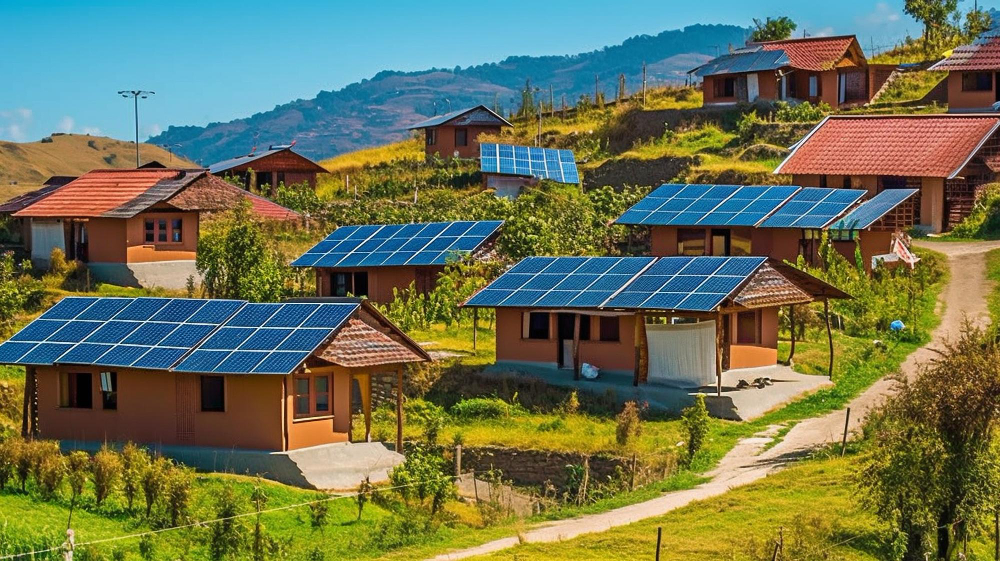
Over the last few years, India has been on the right track in its transition towards renewable energy, especially solar energy. Although there are big solar farms and rooftop solar systems, there is another model that is emerging as a potential favorite – community solar. Such projects, where several households or businesses receive electricity from a single solar power plant, provide a new approach to increase the share of clean energy and support the local economy. What Are Community Solar Projects? A community solar project is a solar power project whereby several people, households, or companies can participate in the use of electricity produced from the project without having to own the solar panels. These systems are typically installed in a central place and are sometimes operated by local energy cooperatives or associations. In a country like India, where only some homes or buildings are suitable for rooftop solar installations, shared solar systems are available. People and companies can continue to get clean energy and reap the financial advantages of solar energy without the initial investment or the need for a roof space to install personal systems.  1. Lower Energy Costs for Participants The first and most tangible community solar advantage is cost saving. People can opt to purchase a part of the solar energy produced and be given credits for their electricity consumption. In many cases, this can lead to substantial cost savings over time, particularly in areas where electricity tariffs are relatively high. In India, where electricity tariffs are still a challenge to many households and small businesses, community solar projects are an opportunity to minimize monthly electricity bills. These savings can help release resources for other important uses, thus improving the welfare of households and the sustainability of businesses. 2. Job Creation and Local Economic Growth The economic benefits of solar projects are not limited to the savings on energy costs. Community solar projects involve many services such as installation, maintenance, and management among others. This leads to the employment of local people, electricians, engineers, and project managers hence improving the economy of the region. These projects are beneficial for the rural and semi-urban areas of India where employment opportunities are scarce and people can be trained and employed here. Employees engaged in these projects can also learn a lot about the expanding renewable energy industry and may find new jobs or business opportunities after the project is completed. The solar energy sector in India is growing at a very fast pace and as more and more community solar projects are developed they will also help in generating employment and boosting the economy. As stated by the Ministry of New and Renewable Energy (MNRE), the renewable energy sector has already generated thousands of employment opportunities and the concept of community solar can further boost employment opportunities.  3. Increased Community Engagement and Empowerment Stakeholder participation in solar initiatives leads to ownership and participation by the community members. As people and companies buy into a community solar project, they are participating in the transition to clean energy. This makes it easier for everyone to work together and ensure that the community becomes more sustainable. In most instances, community solar projects are developed by local authorities, co-operatives, or non-profit making organizations. Such measures may involve the community in the decision-making process and enable them to be involved in the management of the project. This engagement assists in the development of stronger communities and increases the awareness of the need for renewable energy. In India, where rural communities are not well connected to conventional electricity networks, community solar programs provide an opportunity for people to be in charge of their energy destiny. It enables people to shift from the use of fossil fuels and embrace renewable energy sources. 4. Boosting Local Investment and Infrastructure One of the lesser-discussed benefits of community solar projects is their potential to attract local investment and improve infrastructure. Solar energy systems require investments in equipment, grid connections, and maintenance facilities. These investments not only improve the energy infrastructure in the community but also attract further economic activity. For instance, local businesses can benefit from more stable and affordable energy supplies, which can encourage them to expand or invest in new ventures. Additionally, as energy costs decrease, communities can redirect funds toward other critical infrastructure improvements, such as schools, healthcare facilities, or transportation systems. In rural India, where infrastructure development is often a challenge, the economic boost from community solar projects can play a key role in driving overall development. By creating a reliable energy source, these projects help stimulate further investments that benefit the community as a whole. 5. Environmental and Health Benefits While the economic impact is significant, it’s also important to highlight the environmental benefits of community solar projects. By replacing or supplementing conventional energy sources like coal, community solar reduces greenhouse gas emissions and air pollution. This leads to cleaner air, improved public health, and a reduced carbon footprint for the community. In India, where air pollution is a growing concern, especially in urban areas, transitioning to solar energy can contribute to cleaner, healthier environments. Communities participating in shared solar systems are actively contributing to reducing their environmental impact, creating a better future for generations to come. 6. Reducing Energy Insecurity Local energy initiatives like community solar projects also help reduce energy insecurity. In many parts of India, especially in rural and remote areas, access to reliable electricity is still a challenge. Community solar projects provide a dependable, sustainable energy source that is less prone to fluctuations in supply and price. For communities that have faced unreliable or expensive electricity, the introduction of shared solar systems offers an affordable and stable alternative. This can improve quality of life, promote local business growth, and ensure that households have consistent access to power. Conclusion The advantages of community solar projects for local economies in India are multifaceted. From lowering energy costs and creating jobs to empowering communities and improving infrastructure, these projects offer tangible

Solar Innovations in Agriculture

Solar Innovations in Agriculture: Sustainable Farming Practices

In India, agriculture transcends mere occupation; it embodies a lifestyle for countless individuals. With a profound agricultural heritage, the nation has historically relied on conventional techniques for crop cultivation and livestock management. Nevertheless, as the population expands and climate change alters weather conditions, there is an increasing necessity to implement more sustainable agricultural technologies. This is where solar energy plays a crucial role. Solar Innovations in Agriculture are revolutionizing farming by improving energy efficiency, reducing costs, and promoting sustainable practices. This article will examine the transformative impact of solar energy on Indian agriculture and the advantages farmers are reaping from solar-powered irrigation systems, agrivoltaics, and various other solar-driven advancements. 1. Solar-Powered Irrigation Systems A primary challenge confronting Indian farmers is the availability of dependable water sources for irrigation. In numerous rural regions, farmers depend on diesel-powered pumps or erratic electricity supplies to extract water from wells or rivers. These alternatives can be costly, environmentally detrimental, and unreliable, particularly during crucial planting and growing periods. Solar-powered irrigation systems present a cleaner and more dependable solution. These systems utilize solar panels to operate water pumps, enabling farmers to irrigate their crops without reliance on diesel or grid electricity. Given that India enjoys abundant sunlight for the majority of the year, solar-powered pumps represent a practical approach to reducing expenses and enhancing energy efficiency in agriculture. Benefits of solar-powered irrigation systems: Reduced operational costs:  Farmers can save money by eliminating the need for diesel or electricity for water pumping. This is especially helpful for small-scale farmers who may have limited resources. Environmental impact:  Solar pumps produce zero emissions, making them an eco-friendly alternative to diesel pumps, which release harmful pollutants into the air. Reliability:  Solar-powered pumps can function even in remote areas without access to electricity, providing a reliable and sustainable water source for irrigation. 2. Agrivoltaics: Combining Agriculture and Solar Energy A relatively new development in the application of solar energy in the agricultural industry is known as agrivoltaics, which involves the use of the same land for farming and solar power production. In other words, it entails fixing solar panels on farmland in such a way that they do not hinder the growth of plants on the surface. This method allows farmers to generate electricity and at the same time grow crops on their farms. The concept of agrivoltaics is that the solar panels can be placed in a manner that allows some light to fall on the crops, thus providing shade that can be beneficial to some crops by reducing water evaporation and protecting them from scorching heat. In some cases, the use of solar panels may even be beneficial to the crops as it creates a more controlled environment. Agrivoltaics is of great importance in India, where land resources are limited. It enables farmers to fully utilize the land in producing food and at the same time producing renewable energy. The electricity generated from these solar installations can be used on the farm for purposes such as irrigation or other uses or can be fed into the grid and thus provide farmers with an extra source of income. 3. Solar-Powered Cold Storage Solutions One of the major issues that Indian farmers encounter is the lack of adequate numbers of cold storage. Most crops especially fruits and vegetables are highly perishable immediately after harvest due to limited post-harvest handling facilities. This leads to high post-harvest losses and economic burdens to the farmers and other stakeholders. Solar-powered cold storage systems offer a possible solution to this problem. These systems use solar power to run the refrigeration systems and help farmers store their produce for longer durations. Farmers can reduce post-harvest losses, get better prices for their produce, and increase their profits by preserving the freshness of their produce. These cold storage solutions are particularly beneficial in rural areas where the availability of reliable electricity is a challenge.  4. Solar Dryers for Crop Preservation In addition to cold storage, solar technology is being used for crop drying. Traditionally, farmers in India dry crops like grains, fruits, and vegetables by laying them out in the sun. While this method is cost-effective, it exposes the crops to dust, pests, and bad weather, leading to losses in quality and quantity. Solar dryers offer a more efficient and hygienic way to dry crops. These systems use solar energy to create controlled drying environments, ensuring that crops are dried evenly and free from contamination. Farmers can preserve their produce for longer periods, reduce waste, and improve the quality of the dried goods they sell. 5. Economic and Environmental Benefits of Solar Farming Solar innovations in agriculture are not just a change in technology but a change for the better, for the environment and for farmers. The advantages of solar in farming are not only in the form of cost reduction and energy conservation. Solar technology makes farmers more independent, decreases their impact on the environment, and assists in fighting climate change. Solar systems help in the reduction of the use of fossil fuels and other conventional energy sources hence making the environment cleaner. They also conform to India’s long-term renewable energy targets, which seek to enhance the utilization of clean energy to address climate change impacts. Also, the use of solar energy provides farmers with an opportunity to have other sources of income. Farmers can also sell any surplus electricity produced by the solar panels back to the utility company, which provides additional income that can be used to enhance the farming business or to feed their families. 6. Challenges and Future Prospects However, there are still some issues that need to be addressed when it comes to solar energy. The first challenge is the cost of installing solar systems, especially for small-scale farmers. However, with government incentives and subsidies, the use of solar innovations in agriculture is gradually gaining ground. However, there is a need to educate and create awareness of sustainable farming technologies. Some farmers may not even know about the possibility of using

the Future of Solar Energy

How Artificial Intelligence is Shaping the Future of Solar Energy

In the process of shifting towards renewable energy, solar energy is among the most viable solutions in the world today. India is one of the countries that is most suited for this shift due to its abundant sunlight and its renewable energy targets. However, the full exploitation of solar energy has its own unique problems. This is where artificial intelligence (AI) comes in, an innovative technology that is revolutionizing solar energy production, management, and optimization. In this blog, let us discuss how the future of solar energy and AI are connected and how AI applications are fueling the solar energy growth in India. 1. AI Applications in Solar Energy: Transforming Efficiency Transforming EfficiencyAI is one of the most fascinating technologies because it can work with big data and come up with conclusions that a human would not be able to make. AI in solar energy is the use of artificial intelligence and machine learning to analyze solar panels, forecast energy production, and enhance system efficiency. In India, for instance, the climate is quite diverse and AI can be used to optimize the efficiency of solar panels depending on the climate of the region. For example, machine learning algorithms can learn how much sunlight panels will get and then reposition them based on the data. This helps to guarantee that solar energy production is optimal irrespective of the season or geographical region. These AI-based optimizations are especially helpful for large solar farms, for example, in Rajasthan and Gujarat where conditions are severe. AI plays a role in maintaining these systems at optimal levels and minimizing energy losses in the process. 2. Predictive Analytics for Solar Performance Another application of AI that is making a huge difference is the use of predictive analytics for solar performance. Solar power is inherently intermittent; the amount of energy generated is a function of the weather, the time of day, and even the season. AI can be used to forecast future energy output based on historical data and weather patterns in the case of operators. For instance, in a region such as Maharashtra, monsoons can be a major factor that limits the amount of sunlight, and this can be predicted using analytics. They can plan their energy distribution and storage in a better way rather than being surprised by cloudy days or rain. Thus, AI is assisting solar operators in India to achieve stable power generation, despite climate fluctuations. This not only guarantees a steady power source but also cuts down the cost of operating solar facilities.  3. Optimizing Solar Energy Output with AI A ReviewEfficiency of solar energy production is important for both residential use of solar panels on rooftops and utility-scale solar power plants. Real-time monitoring and adjustment is one of the ways through which AI is achieving this. Solar panels are usually subjected to dust, debris, and other factors that may reduce the efficiency of the panels. In a country like India, where dust storms or pollution can hamper the efficiency of solar panels, AI-based systems can track the performance of each panel in real time and notify when cleaning is needed. This is a much more effective approach than regular maintenance or waiting for a problem to be identified by an operator. Since AI is able to monitor the efficiency of the solar panels, they are cleaned or repaired immediately they are detected to be producing less energy. Moreover, AI algorithms can adjust the angles of solar panels to follow the sun during the day. This enhances the amount of light that the panels capture, thus increasing their efficiency. 4. Smart Grid Technologies and AI Integration The integration of AI into smart grid technologies is another way that artificial intelligence is shaping the future of solar energy in India. A smart grid allows for two-way communication between energy producers and consumers, creating a more flexible and reliable energy system. With AI, smart grids can analyze energy consumption patterns, predict demand, and efficiently distribute energy. In India, where power outages are still common in some areas, the use of smart grids powered by AI can drastically improve the reliability of energy delivery. For example, during peak demand times, AI can help balance the grid by temporarily diverting energy from solar installations to where it’s needed most. This ensures that solar energy is not wasted during times of low demand and that energy is available during peak usage. Furthermore, AI can manage energy storage systems, deciding when to store excess solar energy in batteries and when to release it back into the grid. This kind of smart management is essential for maintaining a stable energy supply, especially as India’s solar capacity continues to grow. 5. Machine Learning in Renewable Energy: Revolutionizing Solar Revolutionizing SolarThe application of machine learning in renewable energy is creating new opportunities that were not possible ten years ago. AI algorithms can be trained to make better decisions about how to run solar systems in the future based on past data. These systems evolve over time and become more efficient in handling the generation and storage of energy. In India, where the solar energy sector is still growing fast, this technology can contribute to the acceleration of the shift to clean energy. With time, more data will be gathered from solar installations across the country and the machine learning systems will improve on performance, energy output, and grid stability. For example, AI can determine when a solar panel is likely to develop a fault and arrange for its repair before it fails. This predictive maintenance minimizes the time that solar installations are out of service and enhances the general life of solar systems. In the long run, it implies reduced maintenance expenses and optimum utilization of energy resources. 6. AI’s Role in Expanding Solar Energy Access Another great advantage of AI is that it can help increase the availability of solar energy in regions where it is scarce. In many parts of rural India, electricity is still scarce, and conventional

Environmental Impact of Solar Energy

Understanding the Environmental Impact of Solar Energy

Solar energy has become a leading solution in the fight against climate change and the effort to reduce reliance on fossil fuels. While it’s widely acknowledged for its environmental benefits, there are still questions about its overall impact. In this blog, we will explore the environmental impact of solar energy, as well as the challenges and concerns that come with it. By understanding the broader picture, we can make more informed decisions about the role solar energy plays in shaping a cleaner future. Understanding the environmental impact of solar energy Reduction in Greenhouse Gas Emissions  One of the most significant solar energy environmental benefits is its ability to reduce greenhouse gas emissions. Unlike fossil fuels such as coal, oil, and natural gas, solar power does not emit carbon dioxide (CO2) or other harmful pollutants when generating electricity. This reduction in emissions helps combat climate change, which is driven by the accumulation of greenhouse gases in the atmosphere. By switching to solar energy, homeowners and businesses can significantly reduce their carbon footprint. For example, a typical residential solar panel system can offset around 1.5 to 2 tons of CO2 emissions per year, which is equivalent to planting over 100 trees annually. On a global scale, the more solar energy we adopt, the more we can slow down the warming of our planet. Decreased Dependence on Fossil Fuels  Solar energy is a renewable resource, meaning it is abundant and will not run out, unlike fossil fuels. Our heavy dependence on coal, oil, and natural gas has led to environmental degradation, air pollution, and health issues. By shifting to solar power, we reduce the need for extracting and burning fossil fuels, which in turn decreases the harmful environmental effects associated with mining, drilling, and fracking. The production of electricity from fossil fuels also creates significant water pollution, acid rain, and toxic waste. Solar energy eliminates these issues by providing a clean and sustainable source of power, with minimal environmental harm. Energy Independence  Solar energy promotes energy independence by allowing countries, regions, and even individual households to generate their electricity. This reduces reliance on imported fossil fuels, leading to a more secure and sustainable energy future. Additionally, solar power benefits include reducing the strain on the electrical grid, especially during peak usage times, and decreasing the chances of blackouts or energy shortages. The decentralized nature of solar power, where energy can be generated at the point of use (like on rooftops), contributes to a more resilient and efficient energy system. Conservation of Water Resources  Traditional electricity generation, especially from coal and nuclear power plants, requires a large amount of water for cooling purposes. Solar energy environmental benefits, particularly with photovoltaic (PV) panels, include requiring very little to no water to operate. In a world where freshwater is becoming increasingly scarce, the water-saving benefits of solar energy are significant. By reducing the demand for water-intensive energy production methods, solar power helps protect vital water resources for agriculture, drinking, and natural ecosystems. Environmental challenges of solar energy production Resource Use in Manufacturing  Although solar panels themselves produce clean energy, their manufacturing process does have some environmental challenges of solar energy. The production of solar panels requires mining for raw materials like silicon, aluminum, and rare metals. The extraction and processing of these materials can cause land degradation, water pollution, and energy consumption. Additionally, the production process emits some greenhouse gases and uses hazardous chemicals. However, it’s important to note that once solar panels are manufactured and installed, they generate electricity without further emissions for 25 to 30 years, which makes up for the initial environmental costs. Moreover, ongoing research and technological improvements are helping to make solar panel manufacturing cleaner and more sustainable. Land Use and Habitat Disruption  Large-scale solar farms require significant land area, which can lead to habitat disruption for wildlife. In some cases, the installation of solar panels may involve clearing land, which can have negative effects on local ecosystems and biodiversity. However, careful planning can minimize these solar energy environmental challenges by using already degraded or non-arable land for solar farms. Solar panels can also be installed on rooftops, parking lots, and other existing structures, which eliminates the need for additional land use. Floating solar farms, which are built on bodies of water, are another emerging solution to reduce land-related concerns. Recycling and Disposal of Solar Panels  At the end of their 25- to 30-year lifespan, solar panels need to be properly disposed of or recycled. While many of the materials used in solar panels, such as glass and metal, can be recycled, the process is not yet fully efficient or widespread. Improper disposal of solar panels can lead to environmental challenges of solar energy, as they contain small amounts of hazardous materials like cadmium and lead. The good news is that the solar industry is actively working on improving recycling technologies and infrastructure. As the first generation of solar panels reaches the end of its life, more attention and investment are being directed towards developing effective recycling solutions. Balancing the Environmental Impact While there are some environmental challenges of solar energy, its overall impact is still far more positive than that of fossil fuels. The emissions saved by switching to solar far outweigh the emissions produced during manufacturing. Additionally, with advancements in recycling and manufacturing efficiency, the environmental footprint of solar energy is expected to decrease even further in the coming years. By choosing solar power, individuals, businesses, and governments can contribute to a cleaner, more sustainable future. The environmental benefits—reduced emissions, water conservation, energy independence—greatly outweigh the challenges, making solar energy a key player in the global transition to renewable energy. Conclusion Solar energy offers a cleaner, more sustainable alternative to traditional energy sources like coal and natural gas. While there are some environmental concerns related to its production and land use, the long-term benefits of reducing greenhouse gas emissions, conserving water, and promoting energy independence make solar power a crucial part of our future energy landscape. As technology

Government Incentives for Solar

Understanding Government Incentives for Solar Installation in 2024

As the world shifts toward cleaner and more sustainable energy solutions, India has emerged as a global leader in solar power adoption. The Indian government has been proactive in encouraging the use of solar energy, aiming to reduce the nation’s carbon footprint and move towards energy independence. To support this vision, the government incentives for solar installation more affordable and accessible for homeowners, businesses, and industries alike. Why Solar Energy is Important for India India is blessed with abundant sunlight, making it an ideal candidate for harnessing solar power. With ambitious goals to reach 500 GW of renewable energy capacity by 2030, solar energy plays a critical role in achieving this target. By investing in solar power, not only can the country reduce its reliance on fossil fuels, but it can also create a sustainable future for generations to come. Government Incentives for Solar Installation To accelerate the adoption of solar energy, the Indian government offers a range of incentives for residential, commercial, and industrial solar installations. These incentives help reduce the upfront cost of solar panels, making it more affordable for individuals and businesses to switch to renewable energy. Here are some of the key incentives available in 2024: 1. Subsidies on Solar Panel Installation One of the most significant government incentives for solar installation in India is the subsidy on solar panel systems. The Ministry of New and Renewable Energy (MNRE) provides a subsidy for rooftop solar installations under the Grid-Connected Rooftop Solar Scheme. This scheme offers a subsidy of up to 40% on systems with a capacity of up to 3 kW and 20% for systems between 3 kW and 10 kW. This reduces the initial investment, making solar energy more affordable for homeowners and small businesses. For residential consumers, this subsidy can significantly lower the cost of installing solar panels, allowing them to enjoy reduced electricity bills and a quick return on investment. 2. State-Level Solar Rebates In addition to federal subsidies, various states in India offer rebates and incentives for solar installations. State-level solar rebates vary depending on the region, but they often complement the central government’s initiatives, making solar power even more affordable. For instance, states like Gujarat, Maharashtra, and Rajasthan have introduced additional incentives for solar projects, offering rebates on solar panel systems and even providing subsidies on solar-powered agricultural equipment. These state-level solar rebates encourage local adoption of renewable energy and help residents take advantage of both federal and state incentives. 3. Renewable Energy Grants The Indian government, through MNRE, also offers renewable energy grants to promote the adoption of solar energy. These grants are available for large-scale solar projects, including solar farms, solar-powered industrial units, and community solar initiatives. The government’s focus on scaling up renewable energy production has led to the creation of policies that support the financing and implementation of large solar projects across the country. These grants not only reduce the financial burden on solar developers but also ensure that solar energy becomes a key contributor to India’s power grid. 4. Financing Options for Solar Energy To make solar installation more accessible, the government has partnered with several banks and financial institutions to offer low-interest loans for solar projects. These financing options provide individuals and businesses with the flexibility to pay for solar panel installations over time, making it easier to transition to renewable energy without a large upfront cost. Under the Pradhan Mantri Kisan Urja Suraksha Evam Utthan Mahabhiyan (PM-KUSUM) scheme, farmers can also access financing options to install solar panels for irrigation purposes. This scheme not only helps reduce electricity costs for farmers but also promotes sustainable farming practices. 5. Net Metering Policies Net metering is another important policy promoting solar adoption in India. This policy allows individuals and businesses with solar panel systems to sell excess electricity back to the grid. When your solar panels generate more electricity than you need, the excess energy is sent to the grid, and you receive credits on your electricity bill. Net metering policies vary from state to state, but the overall goal is to encourage the efficient use of solar energy and reduce dependency on traditional power sources. In 2024, many states are expanding their net metering programs, allowing solar users to maximize their savings by generating income from surplus energy. 6. Income Tax Benefits for Solar Installations In addition to the direct incentives, the Indian government also offers tax benefits for those who invest in solar energy. Businesses and industries that install solar panel systems can claim accelerated depreciation on their solar assets, which allows them to recover a significant portion of their investment in the first few years. This reduces the overall cost of solar installations for commercial entities and incentivizes businesses to adopt solar power. For individuals, the government offers tax deductions on loans taken for solar installations, further lowering the financial burden of going solar. 7. Solar Parks and Large-Scale Solar Projects India is also focusing on large-scale solar projects through the establishment of solar parks. These parks are designed to house multiple solar energy systems, providing clean energy to entire communities and regions. The government provides incentives for the development of solar parks, including grants, low-interest loans, and tax benefits for developers. In 2024, the Solar Park Scheme continues to play a crucial role in promoting solar energy on a large scale, helping India meet its renewable energy targets and reduce its carbon emissions. The Future of Solar in India The Indian government’s commitment to renewable energy is evident in its ambitious goals and comprehensive incentive programs. By offering a range of financial incentives, rebates, and policy support, the government is making it easier for individuals, businesses, and industries to invest in solar energy. As India moves closer to its renewable energy targets, the demand for solar installations is expected to rise. With continued government support, solar energy will become an even more integral part of the nation’s energy landscape in the coming years. Conclusion The year 2024 brings significant opportunities for

Urban Heat Islands

The Role of Solar Energy in Reducing Urban Heat Islands

As cities grow and develop, a phenomenon known as the Urban Heat Islands (UHI) effect has become a pressing concern. This effect occurs when urban areas become significantly warmer than their rural surroundings due to human activities, including increased construction, energy consumption, and the use of materials like asphalt and concrete that retain heat. With rising global temperatures, the UHI effect intensifies, leading to higher energy costs, poor air quality, and discomfort for city dwellers. Fortunately, solar energy presents a promising solution. By integrating solar technology into urban areas, we can actively reduce the Urban Heat Island effect and create healthier, more sustainable cities. Understanding the Urban Heat Island Effect Urban Heat Islands occur when the natural landscape is replaced with dense buildings, roads, and other infrastructure that absorb and retain heat. These surfaces trap heat during the day and slowly release it at night, causing cities to remain warmer than rural areas even after sunset. In some cities, this temperature difference can be as much as 10°C (18°F). Factors contributing to UHIs include limited vegetation, waste heat from buildings and vehicles, and high energy consumption in urban areas. The Role of Solar Energy in Reducing Urban Heat Islands Solar energy has the potential to play a significant role in combating the UHI effect. Solar power systems can be integrated into urban infrastructure to provide clean, renewable energy while also helping to cool cities. Here are some of the ways solar energy can contribute to UHI reduction: 1. Urban Solar Initiatives Many cities around the world are launching urban solar initiatives to promote the use of solar panels on rooftops and public spaces. These initiatives encourage businesses, residents, and governments to install solar panels on their properties, reducing reliance on traditional energy sources and lowering the overall demand for electricity during hot summer months. Installing solar panels on rooftops not only generates clean energy but also provides an added layer of insulation. The panels absorb sunlight, preventing the roof from becoming excessively hot. This reduces the amount of heat that enters buildings, making them cooler and decreasing the need for air conditioning. As a result, cities that embrace urban solar initiatives can reduce the UHI effect while also promoting renewable energy use. 2. Green Roofs and Solar Shading Solutions One of the most innovative approaches to reducing the UHI effect involves combining solar energy systems with green roofs. Green roofs, which are roofs covered with vegetation, help cool urban areas by absorbing sunlight, providing shade, and reducing heat retention. When combined with solar panels, green roofs create a dual benefit: they generate energy while also cooling the building and surrounding area. Solar shading solutions, such as solar canopies or pergolas, also offer effective heat reduction strategies. By installing solar panels as shading structures in parking lots, public parks, and building exteriors, we can create cooler spaces beneath them. These solar canopies not only generate electricity but also provide shade, making public areas more comfortable during hot weather. 3. Community Solar Projects Community solar projects offer a way for urban residents to collectively invest in and benefit from solar energy without installing individual systems on their properties. These projects allow multiple households or businesses to share the electricity generated from a central solar array, often located in underutilized urban spaces like vacant lots or rooftops of public buildings. Community solar projects help reduce the UHI effect by generating renewable energy on a larger scale, which reduces the need for fossil fuels to power the city. Additionally, many of these projects are designed with sustainability in mind, incorporating greenery and other heat-reducing features around the solar arrays to further cool the surrounding area. 4. Heat Reduction Strategies in Urban Planning Cities that incorporate solar energy into their broader urban planning efforts are better equipped to address the challenges posed by the UHI effect. By designing new buildings and neighborhoods with solar power in mind, urban planners can create cooler, more energy-efficient environments. For example, solar panels can be integrated into the design of buildings, not only as rooftop systems but also as part of the building facade. These panels act as shading devices, reducing the amount of sunlight that enters the building and thus keeping it cooler. Urban planning can also prioritize the use of solar energy for public infrastructure, such as streetlights, bus stops, and benches, which can all be powered by solar panels. Benefits of Using Solar Energy to Combat Urban Heat Islands There are several key benefits to using solar energy as a tool to reduce the UHI effect: Energy Efficiency:  Solar panels reduce energy consumption by providing a clean, renewable energy source, thereby lowering the demand for traditional electricity, especially during peak summer months when the UHI effect is strongest. Cooling Effect:  Solar installations can directly reduce heat in urban areas by providing shade and reducing the heat absorbed by buildings and infrastructure. This helps lower the overall temperature of cities. Improved Air Quality:  By reducing the demand for fossil fuels, solar energy helps lower carbon emissions and air pollutants, improving air quality in cities and reducing health risks for residents. Cost Savings:  As solar technology becomes more affordable, businesses and residents can save on energy costs by generating their electricity. Additionally, reduced energy consumption leads to lower utility bills, particularly during hot weather when cooling demands are high. Increased Resilience:  Solar energy systems help make cities more resilient to extreme weather events, such as heat waves, by providing a stable and reliable source of electricity that isn’t dependent on the grid. Conclusion The Urban Heat Island effect is a growing challenge for cities worldwide, but solar energy offers a viable and sustainable solution. By incorporating solar power into urban planning, encouraging community solar projects, and utilizing innovative solar shading and green roof solutions, we can cool our cities, reduce energy consumption, and promote environmental sustainability. As urban areas continue to expand, embracing solar energy will be crucial in creating healthier, more livable environments for city dwellers

Contact Us